
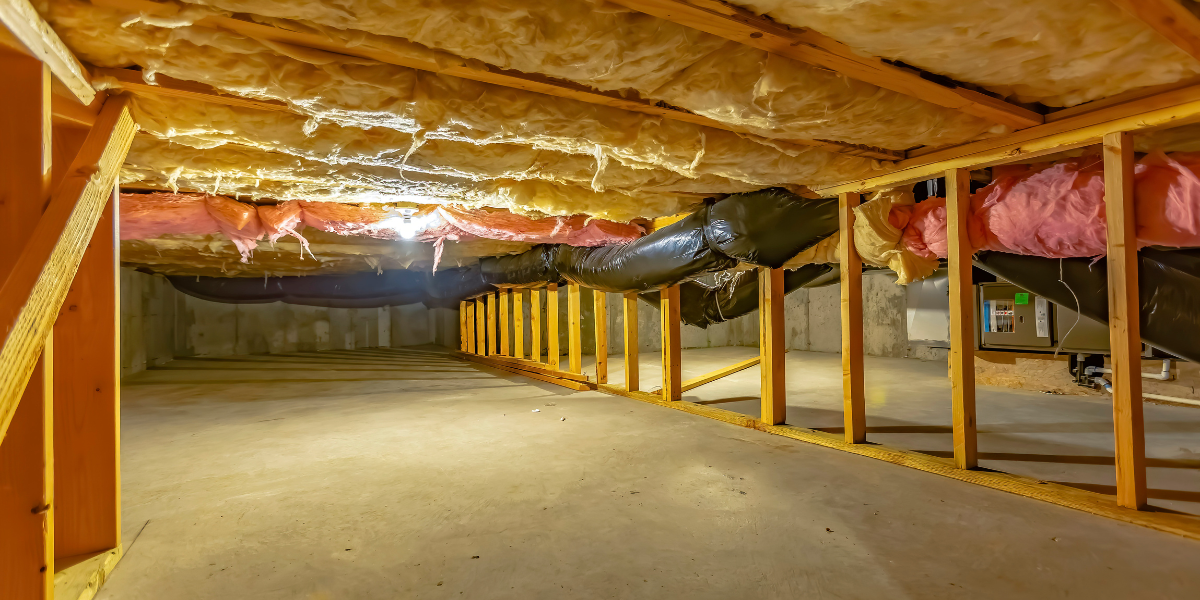
Crawl Space Insulation for Long Island Homes
Cold floors and drafts usually start below your feet. An unsealed crawl space pulls cold, damp air straight into your rooms. We insulate and seal it so your floors feel warmer all year.
Book your free home energy assessment: 631-641-8299.
How it works
Why Crawl Space Problems Affect the Rooms Above
Those cold floors and lower-level drafts almost always trace back to the crawl space. When it’s uninsulated or poorly sealed, outside air pours in around the framing, pipes, wiring, and rim joist, and rises right up into your living space.
Home Efficiency Experts insulates and air-seals crawl spaces across Nassau and Suffolk County. We look at how yours connects to the rest of the house, find where you’re losing energy, and recommend the right fix, whether that’s the walls, the floor above, or both. It starts with a free home energy assessment.
Warning signs
Signs Your Crawl Space May Need Insulation
A crawl space problem may be noticeable inside the home before anyone enters the space itself.
Consider scheduling an assessment if you notice:
Cold floors during winter
Uneven temperatures between rooms
Drafts near baseboards or lower-level rooms
Insulation that is sagging, wet or missing
Visible gaps around the rim joist
Condensation on pipes or ductwork
Rooms above the crawl space that are difficult to heat
Musty odors near the first floor
Higher heating or cooling use without a clear cause
Wet insulation or visible standing water should be investigated before new insulation is installed. Insulation cannot correct an active plumbing leak, poor exterior drainage or ongoing water entry.
Crawl Space Insulation and Moisture-Control Options
The right crawl space insulation depends on whether the space is vented or enclosed, moisture conditions, foundation type, and where the home's thermal boundary should be located. We evaluate the crawl space before recommending the best insulation approach.
Closed-Cell Spray Foam Insulation
Closed-cell spray foam provides insulation while helping reduce air movement and moisture intrusion in suitable crawl space applications. It is commonly used on foundation walls, rim joists, and irregular framing where its rigid structure and high insulating value can improve overall performance.
Rigid Foam Board Insulation
Foam board insulation is often installed on crawl space foundation walls as part of an enclosed crawl space design. It provides continuous thermal resistance while helping reduce heat transfer through concrete or masonry walls.
Crawl Space Air Sealing & Vapor Barrier
Sealing accessible gaps around rim joists, plumbing, wiring, and framing helps reduce unwanted airflow. When moisture is present, a properly installed ground vapor barrier can help limit water vapor entering from exposed soil and support the insulation system.
Our process
Our Crawl Space Insulation Process
Start with a free home energy assessment
We review the crawl space, existing insulation and accessible areas where air may be entering the home. The assessment also helps us understand how the crawl space connects to the floor, foundation and mechanical systems.
Check insulation, air leakage and moisture conditions
We look for missing or damaged insulation, open framing joints, plumbing penetrations and rim-joist gaps. Visible moisture, standing water or damaged materials are documented before a new insulation plan is prepared.
Choose the thermal boundary
We decide whether the work should focus on the crawl space walls, the floor above, or a mix of both. That choice sets the plan for materials and air sealing.
Install the selected materials
Our team preps the accessible work area, seals the approved leak points, and installs the insulation. We use spray foam, foam board, or another material chosen for the conditions in your crawl space.
Review the completed work
Once we’re done, we check the completed work with building-science testing, including a blower-door test and a final inspection by a certified BPI technician.
Benefits
Benefits of Proper Crawl Space Insulation
Warmer floors during colder weather
Insulating the thermal boundary below the living space can reduce heat movement into an unconditioned crawl space.
Fewer drafts near the lower level
Sealing accessible gaps around framing, plumbing and wiring can reduce uncontrolled airflow entering from below.
Improved temperature consistency
Reducing heat transfer and air leakage can help rooms above the crawl space remain closer to the thermostat setting.
Better conditions around crawl space ductwork
Ducts located in unconditioned crawl spaces can lose heat or gain unwanted heat through their surfaces. Sealing and insulating the duct system can help conditioned air reach the intended rooms.
Less energy loss
A better insulated and sealed building envelope reduces the amount of conditioned air lost through accessible gaps and poorly insulated surfaces.
Why choose us
Why Choose Home Efficiency Experts?
Home Efficiency Experts is a Long Island family business with 18 years of experience in home-performance improvements. Its team evaluates the home before recommending insulation, air sealing or HVAC upgrades.
Building-science testing
A home energy assessment helps identify how the house loses energy instead of selecting insulation based on appearance alone.
Home Performance with ENERGY STAR contractor
The company participates in the Home Performance with ENERGY STAR program and follows its assessment and installation standards.
PSEG Long Island Home Performance Partner
This partnership gives eligible homeowners access to current utility programs for insulation, air sealing and qualifying home-performance work.
Pearl Certification
Eligible efficiency improvements can be documented through Pearl Certification to record the upgrades completed at the home.
BPI GoldStar Contractor
The company’s BPI GoldStar status supports technical training, safety procedures and quality-assurance practices.
-
Insulation Services
Review insulation options for attics, walls, basements, and crawl spaces across Long Island homes.
-
Air Sealing
Close accessible gaps around attic penetrations, framing connections, hatches, and other leakage points.
-
Duct Sealing
Seal leaking ductwork so heated and cooled air reaches the rooms it is intended to serve.
-
Rebates and Incentives
See current information about programs that may help reduce the cost of qualifying energy-efficiency improvements.

Take the guesswork out of home improvements-find solutions that will save money and improve indoor comfort. A free home energy assessment can tell you why your utility bills are on the rise. Plus you will receive a free room temperature and humidity gauge with your assessment.
Crawl Space Insulation Frequently Asked Questions
-
Crawl space insulation slows heat transfer between the living area and the space below. Depending on the design, insulation may be installed along the crawl space walls or below the floor. Air sealing is often completed at the same time to close gaps around rim joists, pipes, wiring and framing connections.
-
Wall insulation is commonly used when an enclosed crawl space is brought inside the home’s insulated boundary. Floor insulation may be used when the crawl space remains unconditioned. The correct approach depends on moisture, vents, ductwork, foundation conditions and how the house was built.
-
Crawl space encapsulation is a coordinated moisture, air-sealing and insulation approach. It may include a sealed ground cover, foundation-wall insulation, rim-joist sealing and a humidity-control plan. Full encapsulation should be designed around the crawl space’s existing water and drainage conditions.
-
Crawl spaces with exposed soil generally benefit from a continuous ground vapor barrier because water vapor can enter from the soil. The barrier should be sealed at seams and fitted around walls, piers and penetrations. The need for other vapor-control materials depends on the crawl space design and insulation system.
-
Yes. Closed-cell spray foam can be used in suitable crawl space applications, including foundation walls, rim joists and irregular framing areas. Home Efficiency Experts identifies closed-cell foam as an option for crawl spaces because of its rigid structure and moisture resistance.
-
It can help when heat loss through the floor or foundation is contributing to the problem. The insulation must be installed at the correct thermal boundary and paired with air sealing where needed. Cold floors can also be affected by duct problems, heating-system balance or other building-envelope issues.
-
Insulation that is wet, contaminated, heavily damaged or no longer in contact with the intended surface may need removal. Dry material in good condition may be retained if it works with the new insulation design. The assessment should identify what can remain before work begins.
-
Cost depends on the crawl space size, access, existing material, moisture conditions, insulation method and required air sealing. Projects involving damaged-material removal or difficult access will have a different scope from a clean, open crawl space. An on-site assessment is needed for accurate pricing.
-
Many residential insulation projects can be completed within one day, but crawl space access, preparation, moisture conditions and project size can affect the schedule. Home Efficiency Experts confirms the expected timeline after inspecting the space.
-
Yes. Home Efficiency Experts lists insulation services throughout Suffolk and Nassau counties, including crawl space insulation. Availability for a specific address can be confirmed when scheduling the assessment.