
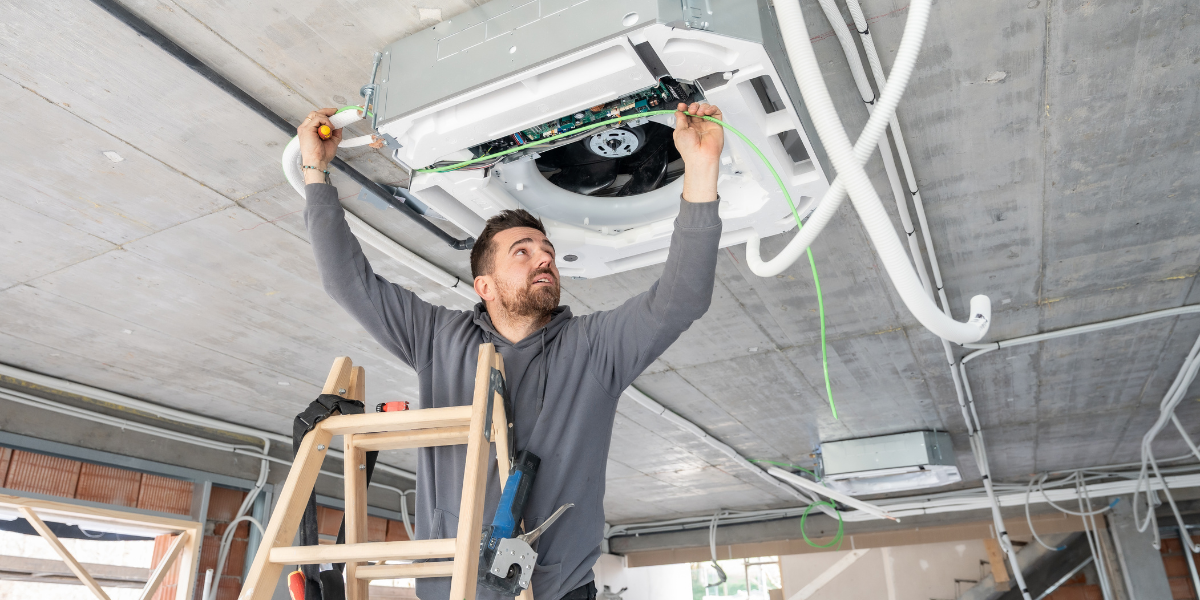
Duct Sealing Services for Long Island Homes
Leaking ductwork can send heated or cooled air into attics, crawlspaces, and other unconditioned areas before it ever reaches the rooms it was meant for. Duct sealing closes accessible leaks along the supply and return system, helping more of that conditioned air arrive where it's needed.
As part of a coordinated HVAC and insulation approach, we inspect accessible ductwork and seal joints, seams, and connections that are contributing to air loss.
How it works
Why Ductwork Leaks Matter
Ductwork is typically joined with sections, seams, and connections that can separate, crack, or lose their seal over time. In an unconditioned attic or crawlspace, a significant leak can mean a portion of your heated or cooled air never reaches the living space at all.
Duct sealing focuses on accessible joints and connections, using mastic sealant or appropriate tape rated for HVAC duct applications, rather than standard household tape, which tends to fail over time.
Warning signs
Signs Your Ductwork May Be Leaking
Duct leaks are often hidden in attics, crawlspaces, or wall cavities. These are common indicators worth having assessed.
Rooms far from the HVAC unit that heat or cool slowly
Visible gaps or disconnected sections in accessible ductwork
Noticeably higher energy bills without a clear cause
An attic or crawlspace that feels unusually warm or cool near ducts
Dusty or musty air coming from vents
HVAC equipment that runs longer than expected to reach set temperature
Our process
Our Professional Duct Sealing Process
Duct inspection
Inspect accessible ductwork in the attic, crawl space, or basement for visible leaks, disconnections, and failing ductwork seals.
Leak assessment
We note which leaks are likely having the greatest impact on comfort and efficiency, prioritizing accessible, higher-impact areas.
Sealing
Accessible joints, seams, and connections are sealed using mastic or duct-rated sealing materials appropriate for the application.
Follow-up review
We discuss what was sealed and note any sections that may require insulation or further evaluation.
Benefits
Benefits of Professional Duct Sealing
More Air Reaching Each Room
Sealing leaks that occur in the duct system will ensure that more conditioned air reaches registers rather than an attic or crawlspace.
More Even Room Temperatures
Rooms that used to run hotter or colder than the rest of the house tend to even out once the larger duct leaks are sealed.
Reduced HVAC Runtime
With less conditioned air being lost in the process, the equipment can operate for a shorter amount of time to achieve a desired temperature.
Improved Indoor Air Quality
Sealing leaks on the return side can minimize the quantity of dust, insulation fibers or attic air that enter the duct system.
Our Duct Sealing Process and Timeline
Initial Duct Inspection
We inspect the accessible ductwork in the attic, basement, or crawlspace and pinpoint the joints and seams losing air.

Professional Duct Sealing
We seal the leaking joints, seams, and connections with mastic or duct-rated materials built for HVAC use — not standard household tape.

Final Review and Cleanup
We confirm the sealed sections, tidy the work area, and flag any ducts that may still need added insulation.
Other Insulation and Building-Envelope Services
-
Insulation Services
From attic to crawl space insulation, we provide customized insulation solutions that help Long Island homeowners lower energy bills and create a more comfortable home.
-
Air Sealing
Close the gaps that let conditioned air escape and outdoor air in.
-
Blown-In Cellulose Insulation
Dense-pack cellulose for attics and hard-to-reach cavities.
-
Spray Foam Insulation
Air seal and insulate in one step for hard-to-reach or irregular spaces.
-
Foam Board Insulation
Rigid insulation for attic access points, kneewalls, and equipment areas.

Take the guesswork out of home improvements-find solutions that will save money and improve indoor comfort. A free home energy assessment can tell you why your utility bills are on the rise. Plus you will receive a free room temperature and humidity gauge with your assessment.
Frequently Asked Questions
-
Symptoms of this include rooms that are slower to heat or cool, higher energy bills, and dusty air from vents. You may have a duct inspection to verify the area and extent of any leaks.
-
We use mastic sealant or duct-rated tape designed for HVAC applications. Standard household duct tape is not recommended, since it tends to dry out and fail over time.
-
Sealing significant duct leaks can reduce wasted conditioned air, which may lower HVAC runtime and energy use. The impact depends on the extent of the leakage and the home's overall condition.
-
Not always. Ductwork within a finished wall or ceiling can only be accessed with more intensive work. We are interested in sealing the accessible sections without opening the finished surfaces.
-
Sealing existing ductwork is often evaluated as part of an HVAC assessment, since leaky ducts can affect how a new system is sized and how well it performs once installed.